
Exercises To Calm Your Anxious Thoughts
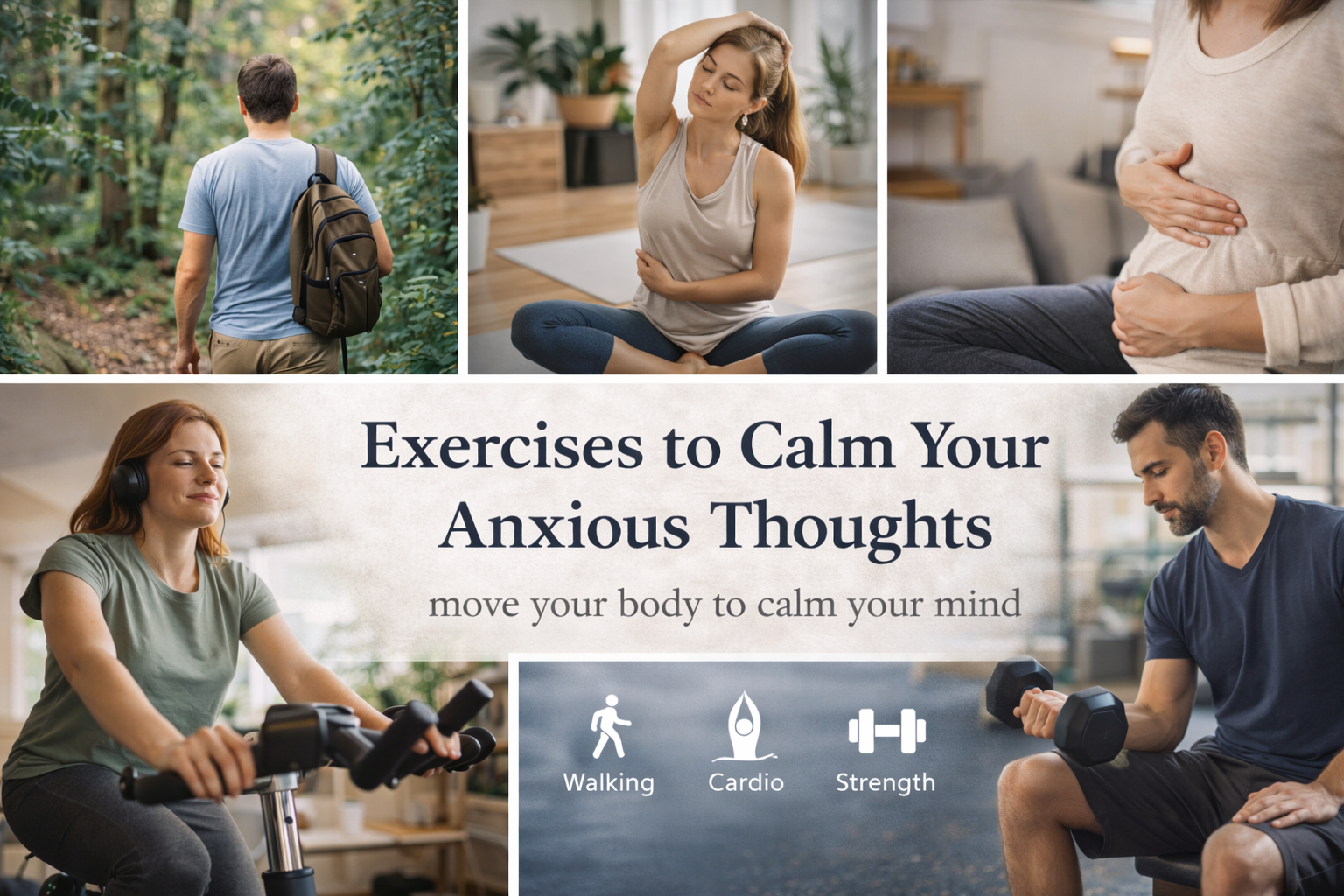
Signal Safety to Your Nervous System…
Anxiety isn’t a lack of willpower.
It’s a nervous system stuck in overdrive.
When your thoughts race, your body is usually leading the conversation—tight chest, shallow breathing, restless energy. Trying to “think your way out of anxiety” rarely works.
Movement does.
The right kind of exercise doesn’t just distract your mind—it signals safety to your nervous system, which is where anxious thoughts actually begin.
Here are exercises that calm anxiety by working with your body, not against it.
Why Exercise Helps Anxiety
Anxious thoughts are often a response to:
Built-up stress hormones
Excess adrenaline
Lack of physical release
Chronic tension
Exercise:
Lowers cortisol
Increases endorphins
Regulates breathing
Grounds you in the present moment
You don’t need intense workouts.
You need intentional movement.
1. Walking (Especially Outside)
Walking is one of the most effective ways to calm anxiety.
Why it works:
Rhythmic movement soothes the nervous system
Nature reduces sensory overload
Gentle cardio burns off excess adrenaline
How to do it intentionally:
Walk for 10–30 minutes
Keep your phone in your pocket
Breathe through your nose
Let your arms swing naturally
If your thoughts spiral, bring your focus back to your steps.
2. Low-Impact Cardio (Without Pressure)
Anxiety responds best to steady-state movement, not punishment.
Good options:
Cycling
Elliptical
Swimming
Light jogging
Focus on:
Consistent pace
Deep breathing
Movement over metrics
This tells your body: We’re moving, not running from danger.
3. Yoga or Stretching for Tension Release
Anxiety often hides in the body.
Common tension spots:
Jaw
Neck
Shoulders
Hips
Slow stretching helps release stored stress.
Try:
Forward folds
Hip openers
Spinal twists
Child’s pose
Move slowly.
Breathe deeply.
Let your body unwind.
4. Strength Training (Grounding, Not Maxing Out)
Strength training can be calming when done intentionally.
Why it helps:
Builds physical confidence
Grounds you in your body
Shifts focus away from thoughts
Best approach:
Moderate weight
Slow, controlled reps
Focus on form and breath
Avoid high-intensity, rushed lifting when anxious—it can increase stimulation.
5. Breath-Focused Movement
If anxiety feels overwhelming, start with breath.
Try this simple reset:
Inhale for 4 seconds
Exhale for 6 seconds
Repeat for 3–5 minutes
You can do this while:
Walking
Stretching
Sitting quietly
Longer exhales activate your parasympathetic nervous system—the body’s calming switch.
How Often Should You Move?
Consistency matters more than duration.
Aim for:
20–30 minutes most days
Short movement breaks throughout the day
Gentle activity when anxious, not avoidance
Even five minutes helps.
What Exercise Shouldn’t Feel Like
Anxiety-calming movement is not:
Punishing
Competitive
Overstimulating
About burning calories
It’s about regulation, not exhaustion.
Final Thought
Anxious thoughts are not a personal failure.
They’re information.
When your mind is loud, your body needs movement—not more thinking.
Move with intention.
Breathe deeply.
Let your nervous system remember what calm feels like.
That’s where relief begins.
