
The Beginners Guide to Meditation
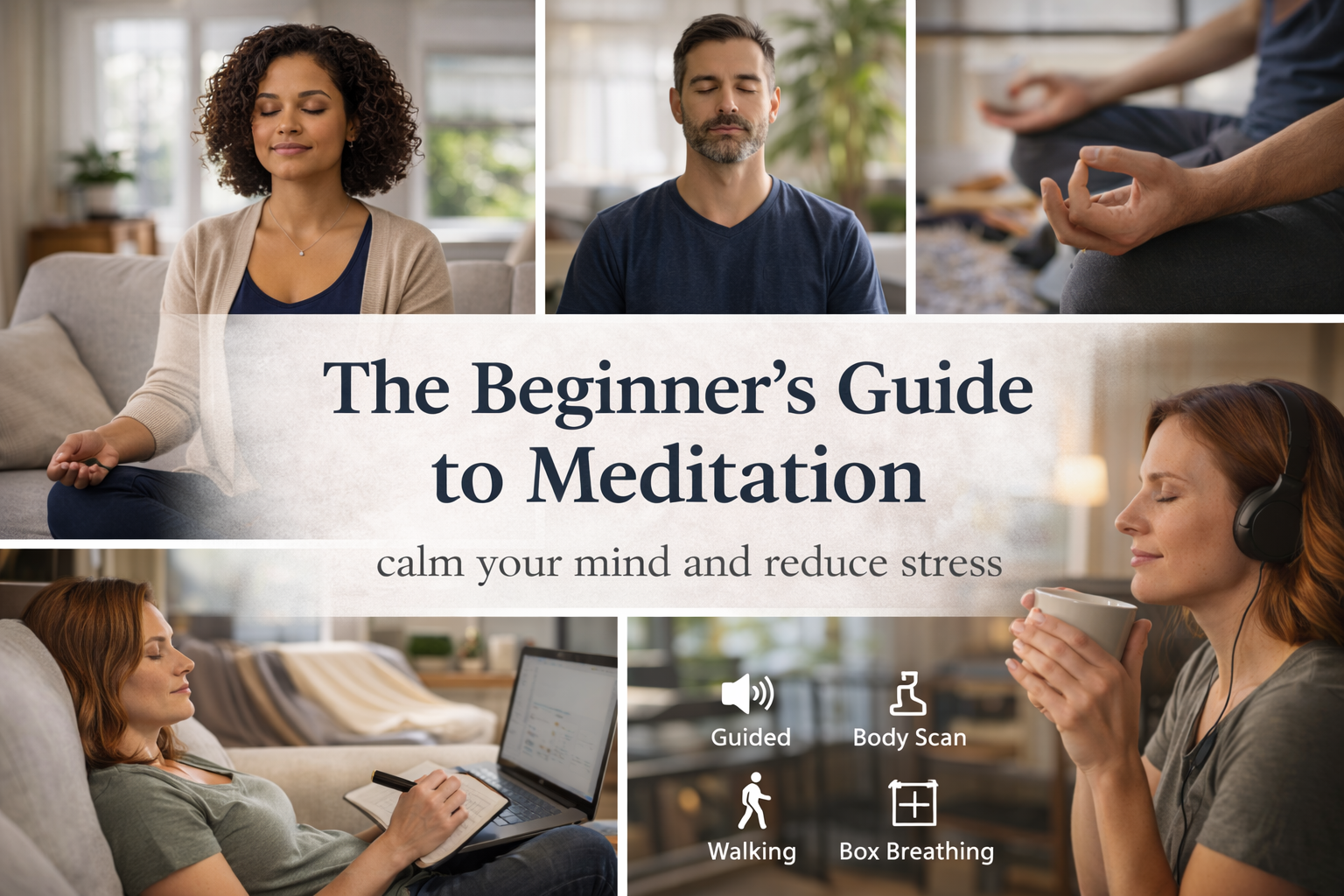
Simply notice your thoughts…
Meditation isn’t about emptying your mind, sitting perfectly still, or becoming “good” at calm.
It’s about learning how to notice your thoughts without letting them run your life.
If you’ve ever said “I can’t meditate because my mind won’t shut up,” this guide is for you.
What Meditation Actually Is (and Isn’t)
Meditation is:
Awareness
Presence
Training attention
Creating space between thought and reaction
Meditation is not:
Stopping thoughts
Forcing calm
Spiritual perfection
A personality type
Your mind thinking during meditation means you’re doing it right.
Why Meditation Works
Meditation helps you:
Reduce stress and anxiety
Improve emotional regulation
Increase focus and clarity
Respond instead of react
Improve mood and patience
Think of it as mental hygiene—like brushing your teeth, but for your nervous system.
How to Start (Without Overcomplicating It)
1. Start Small (Seriously)
You do not need 20 minutes.
Begin with:
2–5 minutes
Once per day
Consistency matters more than duration.
2. Choose a Simple Position
Sit in a chair
Sit on the floor
Lie down (only if you won’t fall asleep)
Comfort > posture.
3. Focus on Your Breath
Inhale through your nose
Exhale slowly through your nose or mouth
Don’t control it—just notice it
Your breath is your anchor.
4. Expect Your Mind to Wander
It will.
When it does:
Notice the thought
Label it gently (“thinking”)
Return to your breath
No judgment. No frustration.
Each return is the practice.
Common Beginner Mistakes
❌ “I’m bad at this.”
There is no “bad” meditation.
❌ “My mind is too busy.”
That’s why you meditate.
❌ “I don’t feel relaxed.”
Meditation builds awareness before it builds calm.
Types of Meditation That Are Beginner-Friendly
If breath-focused meditation feels hard, try:
🔹 Guided Meditation
Someone talks you through it. Great for beginners.
🔹 Body Scan
Bring attention slowly through your body.
🔹 Walking Meditation
Focus on the sensation of each step.
🔹 Box Breathing
Inhale 4 seconds → Hold 4 → Exhale 4 → Hold 4
When to Meditate
There’s no perfect time, but common options include:
First thing in the morning
During a lunch break
Before bed
When you feel overwhelmed
Choose a time you can stick to.
How to Make It a Habit
Pair it with an existing routine (after brushing teeth)
Set a timer
Use an app if helpful
Keep it short and achievable
Meditation becomes easier when you stop trying to make it “special.”
What Progress Actually Looks Like
Progress isn’t:
Fewer thoughts
Constant calm
Progress is:
Noticing stress sooner
Recovering faster
Pausing before reacting
Feeling more grounded
Subtle changes matter.
Final Thought
Meditation isn’t about changing who you are.
It’s about meeting yourself with awareness instead of avoidance.
Start small. Stay consistent. Be kind to your mind.
That’s the practice.
