
How to Take An Effective Mental Health Day
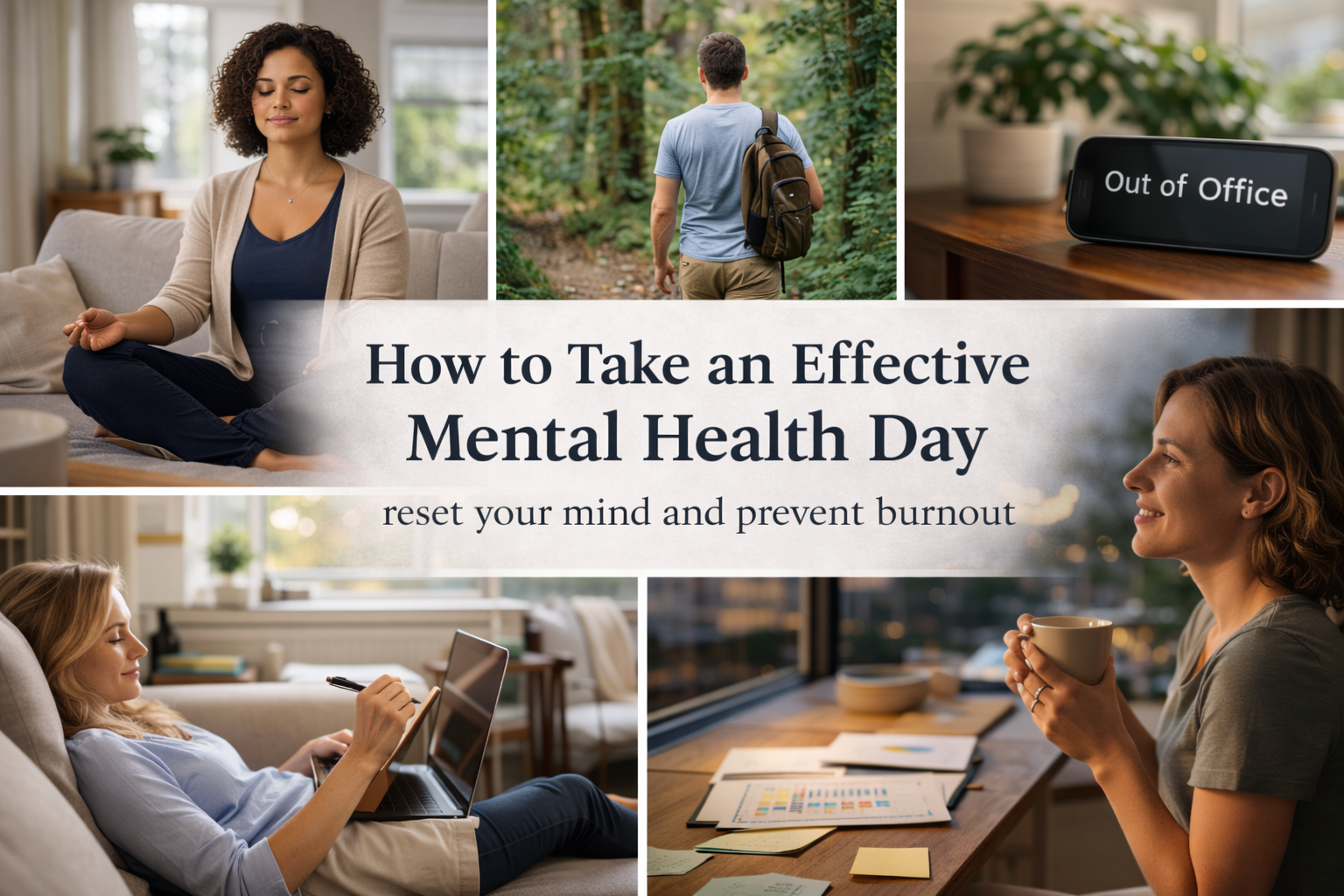
Reset your Nervous System, Regain Clarity, Prevent Burnout.
A mental health day isn’t about avoiding responsibility.
It’s about resetting your nervous system, regaining clarity, and preventing burnout before it costs you more time, energy, or health.
Too often, people take a day off and end it feeling just as drained—because they spent it scrolling, stressing, or feeling guilty for resting.
An effective mental health day is intentional. Here’s how to do it right.
1. Decide Why You’re Taking the Day
Before the day starts, name the purpose.
Ask yourself:
Am I mentally exhausted?
Am I emotionally overwhelmed?
Am I burned out or disconnected?
Do I need rest, clarity, or emotional processing?
Your day should match the need.
Rest and clarity are not the same—and trying to get both without intention often gets you neither.
Write one sentence:
“Today is for ___.”
That sentence becomes your guide.
2. Disconnect Without Disappearing
A mental health day is not a free-for-all.
Set boundaries:
Silence work notifications
Set an out-of-office message
Let one trusted person know how to reach you if truly necessary
Then stop checking.
Your brain cannot recover while it’s still anticipating demands.
3. Start Slow, Not Scattered
Resist the urge to “make the most of the day.”
Instead:
Wake up without an alarm if possible
Eat something nourishing
Avoid jumping straight into stimulation
Slow starts regulate your nervous system and create emotional safety—which is essential for mental recovery.
4. Do One Thing That Grounds Your Body
Mental exhaustion often lives in the body.
Choose one grounding activity:
A walk outside
Stretching or gentle movement
A long shower
Breathwork or meditation
This isn’t about productivity.
It’s about coming back into your body instead of living in your head.
5. Create One Moment of Clarity
An effective mental health day includes reflection—but not rumination.
Try one of these:
Journal for 10–15 minutes
Write out what feels heavy
Ask yourself: What am I avoiding? What do I need?
Stop when clarity arrives.
You’re not trying to solve everything—just name what’s true.
6. Remove Pressure to Be “Better” Tomorrow
This is where most people sabotage the day.
A mental health day is not a performance review.
You don’t need to:
Fix your life
Have an epiphany
Return fully recharged
The goal is relief, not transformation.
Sometimes improvement looks like:
Less tension
Better sleep
A calmer response to stress
That’s enough.
7. End the Day with Gentle Preparation
Before the day ends:
Look at tomorrow briefly
Choose one or two priorities
Set yourself up for an easier re-entry
This prevents the anxiety spike that often undoes the benefit of taking time off.
What an Effective Mental Health Day Really Does
It:
Lowers emotional intensity
Restores internal safety
Creates mental space
Prevents burnout from becoming something worse
It doesn’t erase stress.
It keeps stress from running your life.
Final Thought
Taking a mental health day isn’t weakness.
It’s self-leadership.
The most capable people don’t push through endlessly—they pause, recalibrate, and return with intention.
Use the day well.
Your future self will thank you.
